Exeter College have improved their Engineering and Automotive training facilities through £797k capital programme funding.
This project enabled Exeter College to acquire:
- Electric and hydrogen training vehicles, including a fully interactive Toyota Mirai hydrogen fuel cell electric vehicle trainer, giving learners hands-on experience with future automotive technologies.
- Two new hybrid vehicles and supporting diagnostic equipment to train technicians in the repair and maintenance of alternatively powered vehicles.
- Haas Automation CNC machinery, allowing students to develop precision engineering and manufacturing skills used across sectors such as automotive and renewable energy.
- New virtual welding systems, expanding one of the UK’s largest virtual welding suites to enhance capacity, improve safety, and significantly reduce energy use and consumables during training.
- 2 New Solar Photovoltaic (PV) training bays.
So far approximately 169 learners have benefited from the improved facilities and training opportunities. It’s estimated that over 120 apprenticeships will be supported through this grant funding over the next five years.
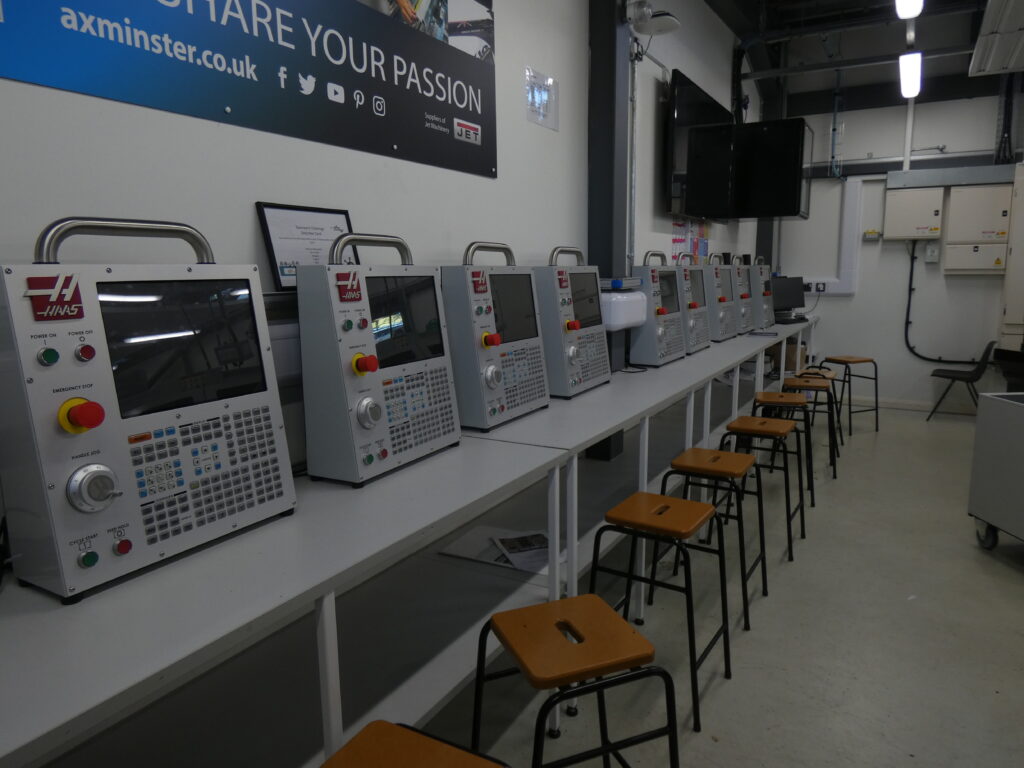
“On the practical side of the course we have been given the opportunity to use Computer Numerical Control (CNC) mills and CNC lathes. This programme gives you a very in-depth and close relationship with these tools so you can feel confident with them even before you enter the working environment.” Design and Development for Engineering and Manufacturing T Level student
Mike Blakeley, Executive Director of Partnerships and Apprenticeships said:
“As a key learning and training provider in the South West we have a responsibility to ensure our provision is fully responsive to the requirements of the economy. It is our duty to ensure we are adequately preparing learners so they can progress into exciting opportunities available within the workforce in this region, and beyond, with the skills to support an industrial strategy based on green growth.”
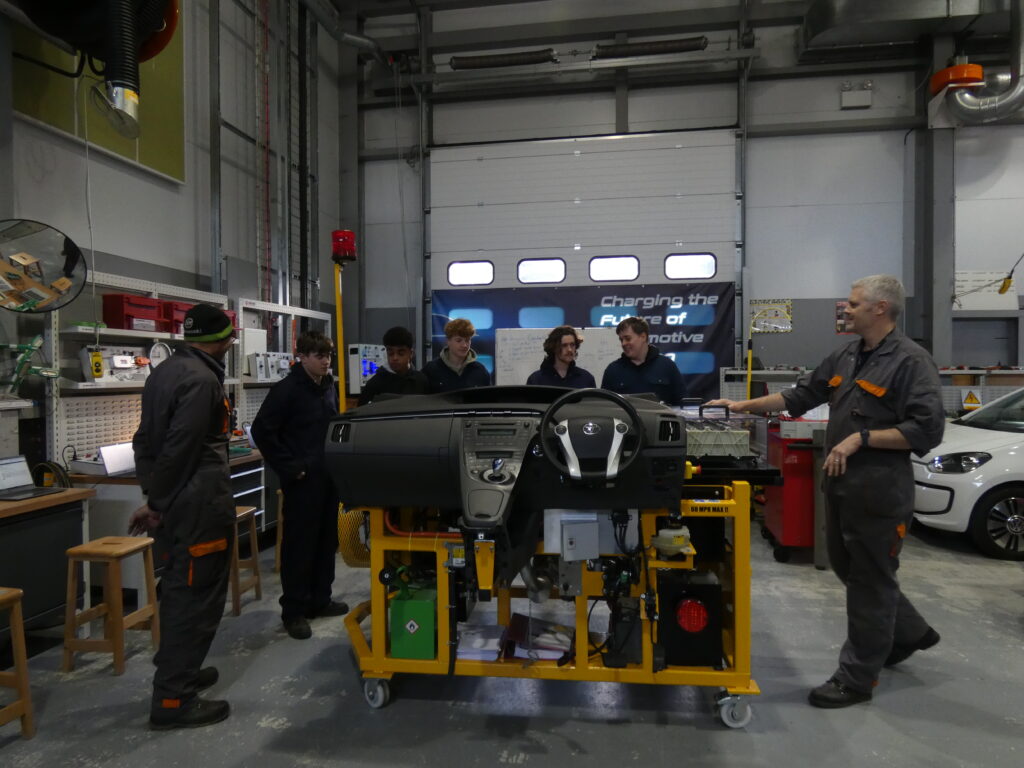
Traditional training for automative students has included using older car models in the workshop, but with emerging technologies being implemented at pace, modern kit is needed for students to learn new skills. The grant funding has enabled Exeter College to make many investments that bring skills training up to the cutting edge of modern green technology to help drive net zero across Devon and Torbay.
The addition of new technologies within the automative workshop has given students the opportunity to experience similar scenarios that they would experience in a main dealer. Virtual welding has been introduced which mimics the skills needed in precision welding for projects in the South West such as Hinkley Point and district heating systems.
Improving skills training across the region not only increases the skills base available for future clean energy projects but improves the outcomes of those individuals undertaking the training. The investments made at Exeter College support not only the South West’s growing clean energy and advanced manufacturing industries, but the government’s aim to reach net zero by 2050.
The capital programme was funded by the UK government as part of the devolution deal for Devon and Torbay which was managed by Devon County Council.
To find out more about the courses on offer at Exeter College, visit their website.